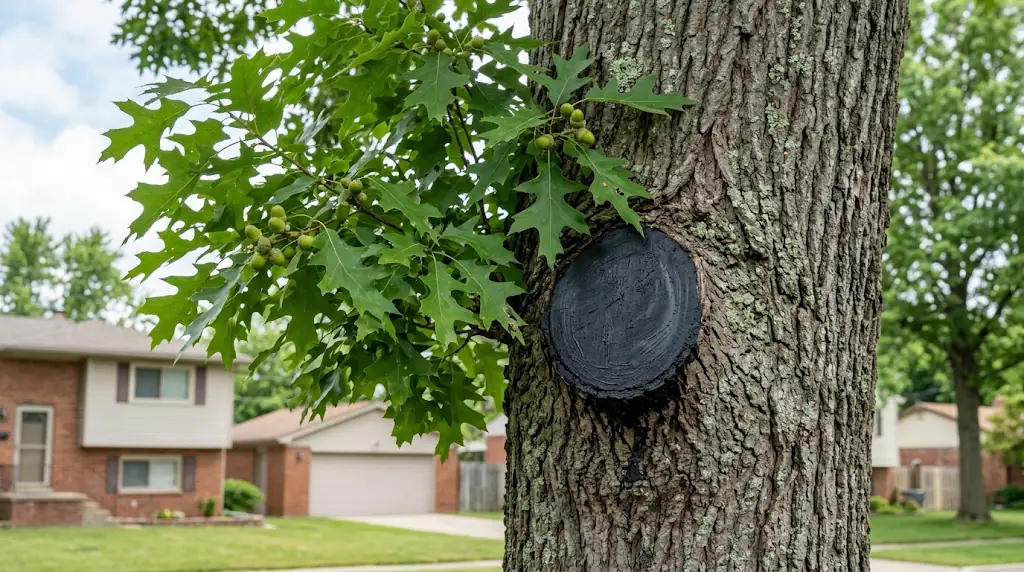
Trimming or wounding oak trees in Oakland and Wayne County is biologically dangerous and restricted between April 15 and July 15 due to the high transmission risk of Oak Wilt disease (Bretziella fagacearum). While pruning private trees during this window is not a statewide criminal violation, it breaches municipal tree preservation standards across Metro Detroit and risks killing valuable mature oaks within three to six weeks through insect vectoring and underground root grafts.
The state’s dormant winter window—from November 1 through March 14—is the safest period to prune, trim, or clear oak canopies throughout Southeast Michigan.
The Oak Wilt Seasonal Risk Window
The Michigan Department of Natural Resources categorizes oak pruning risk into three distinct seasonal tiers based on sap-feeding beetle activity and fungal spore production.
| Risk Level | Calendar Dates | Biological Condition | Permissible Tree Operations |
| High Risk (Do Not Prune) | April 15 – July 15 | Peak Nitidulid beetle flight; fresh fungal spore pads (mycelial mats) active | No standard trimming. Removals permitted only with immediate root-graft trenching and tree wound paint applied within 10 minutes. |
| Medium Risk (Exercise Caution) | July 16 – October 31 | Beetle populations decline; temperatures remain warm enough for fungal colonization | Selective pruning permitted if essential; every fresh cut must be sealed immediately with tree wound paint. |
| Safe / Low Risk (Optimal Window) | November 1 – March 14 | Beetles completely dormant; fungal mats frozen; trees fully dormant | Full structural pruning, canopy thinning, deadwood removal, and standard removals without wound paint. |
How Oak Wilt Spreads Across Metro Detroit
Oak Wilt is a lethal fungal pathogen that attacks the vascular water-conducting vessels (xylem) of oak trees. The tree produces defensive structures called tyloses, which plug its own vessels, halting water transport and causing rapid canopy wilt.
The pathogen spreads through two mechanisms:
1. Overland Spread via Sap Beetles
When an oak is trimmed, cut, or damaged by lawnmowers between mid-April and mid-July, the exposed wood bleeds sap. Sap-feeding beetles from the family Nitidulidae (commonly called picnic beetles) detect this scent within 10 minutes of cutting.
If these beetles previously fed on a sporulating fungal mat of an infected oak, they deposit viable spores directly into the fresh cut. A single pruning cut on a healthy red oak can establish a new disease epicenter that devastates an entire neighborhood block.
2. Below-Ground Spread via Root Grafts
Up to 90% of all oak wilt mortality in suburban settings occurs underground. Oaks within 35 to 100 feet of one another connect their root systems through natural root grafts. Once an oak tree is infected via beetle transmission, the fungus travels downward into the root vascular network and moves through grafted root plates into adjacent healthy trees. In dense residential areas like Farmington Hills, Livonia, and Novi, this underground transmission spreads rapidly outward, killing dozens of mature trees across adjoining lots.
Red Oak vs. White Oak: Species Vulnerability
Susceptibility and mortality timelines vary dramatically depending on the oak species:
- The Red Oak Group (Northern Red Oak, Black Oak, Pin Oak, Scarlet Oak): Leaves feature pointed, bristle-tipped lobes. Vulnerability: Extreme. Once infected, red oaks exhibit rapid yellowing, browning, and leaf drop starting at the outer crown. A mature 80-foot red oak will die completely within three to six weeks of showing initial wilt. There is no chemical cure once systemic infection sets in.
- The White Oak Group (White Oak, Bur Oak, Swamp White Oak, Chinquapin Oak): Leaves feature rounded lobes without bristle tips. Vulnerability: Moderate to High. White oaks possess natural compartmentalization defenses that slow the fungal spread. An infected white oak can survive for multiple years, exhibiting progressive single-branch dieback. Systemic fungicide injections (propiconazole) can successfully save white oaks if administered before 30% crown loss occurs.
Municipal Regulations and Legal Liability in Western Suburbs
Pruning oaks outside the safe window creates legal and financial exposure across Western Wayne and Oakland County.
Municipal Right-of-Way Ordinances
In cities like Livonia, Plymouth, and Westland, cutting or damaging any tree within the public street parkway without a permit is illegal under municipal forestry codes. Trimming a city-owned oak between April 15 and July 15 without written authorization from the City of Livonia Forestry Department triggers immediate stop-work orders, revocation of municipal commercial tree licenses, and misdemeanor citations.
Neighbor Negligence and Treble Damages
If you or an unlicensed tree contractor prunes an oak tree along your property boundary in June and the infection spreads via root grafts to your neighbor’s historic red oaks, you face substantial legal liability under Michigan tort law. Under Michigan Compiled Laws (MCL 600.2919), individuals who wrongfully damage or despoil trees on another person’s land are liable for three times the actual monetary value of the destroyed timber. The replacement value of a mature 70-foot Northern Red Oak easily exceeds $15,000 to $25,000, creating personal financial liabilities surpassing $75,000.
Emergency Protocols: Storm Damage and Mechanical Wounding
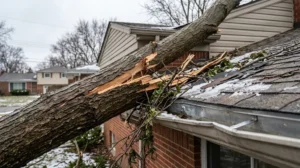
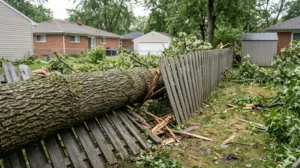
Severe June thunderstorms, microbursts, and high-wind events frequently tear major oak branches during peak beetle season across Wayne and Oakland counties. When accidental damage occurs, follow this protocol:
- Immediate Wound Sealing: Cover every exposed branch stub, torn bark surface, or chainsaw cut with water-based latex paint or aerosol pruning sealant. The paint forms an impenetrable physical barrier that traps tree sap vapors and prevents Nitidulid beetles from landing. This must be executed within 10 to 30 minutes of limb breakage.
- Postpone Flush Cutting: If a branch is hanging, make a clean stabilization cut past the fracture, paint the stub immediately, and postpone cosmetic or structural collar cuts until November.
- Quarantine the Wood: Never stack freshly cut summer oak timber for firewood. If the wood came from a diseased tree, it will produce spore mats the following spring. Diseased timber must either be chipped on-site, debarked, or stacked and sealed completely beneath 4-mil clear plastic with all edges buried in soil for a minimum of one full year.
How Professional Arborists Safely Remove Oak Trees in Summer
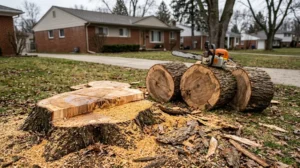
When a dead, compromised, or hazardous oak threatens a house, power lines, or public safety in Canton, Novi, or Redford, removal cannot always wait for winter. Qualified tree contractors utilize rigorous containment strategies:
- Root Graft Severing (Trenching): Before felling a confirmed oak-wilt-infected tree, a vibratory plow or mechanical trencher must cut the soil down to a depth of 5 feet around the perimeter of the drip line. This breaks all underground root connections to adjacent oaks before the dying tree pulls the fungus through the root system.
- Cold-Sealed Equipment Protocols: Chainsaw bars, climbing spikes, and rigging ropes must be thoroughly sterilized between cuts using a 70% isopropyl alcohol or 10% bleach solution to eliminate cross-contamination between properties.
- Immediate Log Haul-Away: Timber from summer removals must be trucked directly to licensed disposal sites or industrial processors outside the suburban canopy.
To schedule safe, compliant winter oak pruning or inspect a declining tree on your property in Livonia, Canton, Plymouth, Westland, Redford, Farmington Hills, or Novi, visit the contact page to request an on-site property evaluation with Livonia Tree Removal.