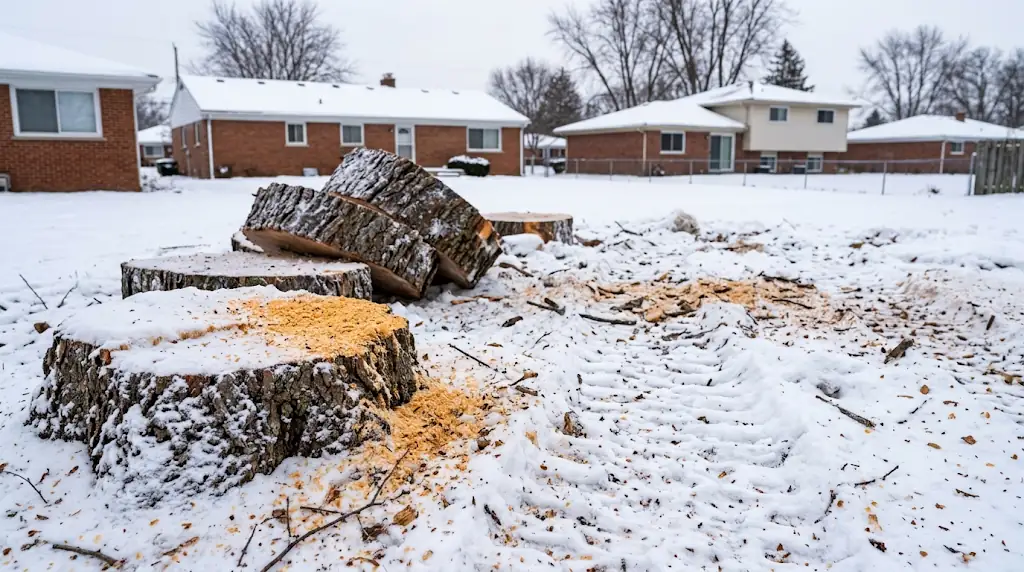
Yes, winter tree removal is typically 10% to 25% cheaper and substantially safer for residential lawns in Metro Detroit’s western suburbs. Sub-freezing temperatures freeze the region’s dense glacial clay soil solid, preventing heavy equipment from rutting turf, while dormant trees without leaf canopies reduce crew labor hours, rigging friction, and brush volume.
Homeowners who schedule removals between December and March capitalize on seasonal contractor discounts, bypass spring disease-transmission windows, and eliminate the lawn repair costs associated with summer machinery traffic.
Winter vs. Summer Tree Removal: Seasonal Comparison
Evaluating cost, site impact, and operational variables highlights the distinct mechanics of cold-weather tree work in Southeast Michigan.
| Operational Factor | Summer (June – August) | Winter (December – March) | Suburban Impact & Advantage |
| Average Base Cost | Standard baseline ($700 avg) | 10% to 25% lower ($525 – $630 avg) | Lower seasonal demand drives contractor discounts. |
| Turf & Lawn Impact | High risk of deep wheel ruts and compaction | Zero to minimal impact | Frozen ground supports skid steers and bucket trucks. |
| Canopy Weight & Drag | High (full foliage adds 1,000–3,000 lbs) | Low (bare branch architecture) | Lighter branches allow faster rigging and fewer cuts. |
| Oak Wilt Pathogen Risk | High risk (beetles active April 15 – July 15) | Zero transmission risk | Beetles and fungal spores remain completely dormant. |
| Understory Garden Damage | High (perennials and turf active and fragile) | Negligible (perennials dormant under snow) | Frozen ground and snow pack buffer falling branch drops. |
| Permit Processing Time | 5 to 14 business days | 2 to 5 business days | Municipal forestry offices handle fewer seasonal filings. |
The Economics: Why Winter Rates Drop in Southeast Michigan
Tree service operating expenses stabilize in the winter, creating direct savings for residential property owners.
- Seasonal Demand Slump: Residential tree requests decline sharply after autumn leaf drop. To keep full-time ISA-certified arborists, crane operators, and ground crews employed through January and February, reputable contractors discount labor rates by 10% to 25% compared to peak post-storm summer rates.
- Faster Rigging Cycles: A mature 70-foot Silver Maple carries thousands of pounds of water weight in its foliage during July. In January, that same tree is deciduous and bare. Rigging crews handle lighter loads, make cleaner cuts, and lower limbs through branch structures without leaf-drag resistance.
- Reduced Chipping and Hauling Volume: Without tons of green leaves clogging wood chipper feed rollers, brush processing speeds up by roughly 30%. Crews chip branch wood faster, pack chip trucks tighter, and complete jobs in fewer total on-site labor hours.
Soil Mechanics: Why Frozen Clay Protects Western Suburban Lawns
Western Wayne and southern Oakland counties—including Livonia, Canton, Plymouth, Westland, and Redford—sit atop high-density glacial lake plain clays (predominantly the Hoytville, Toledo, and Belleville soil series).
During summer and autumn rain cycles, this clay holds water, turning residential lawns into soft, saturated sponges. Driving a 7,000-pound mini-skid steer, compact track loader, or 12,000-pound mobile spider lift across a wet lawn leaves deep 4- to 8-inch ruts, shears subterranean root zones, and severely compacts soil structure. Repairing compacted clay requires mechanical aeration, topsoil leveling, and total sod reinstallation, easily adding $800 to $2,500 to a homeowner’s post-removal landscaping bill.
Research from Michigan State University Extension confirms that operating heavy equipment across frozen, snow-covered ground eliminates soil compaction and rutting. When Southeast Michigan ground freezes past the initial 3- to 6-inch frost line, the turf acts as a solid bridge. Heavy tracked machinery can transport massive trunk rounds from backyards to the street without puncturing the sod or leaving sunken tire tracks.
Canopy Visibility and Structural Precision
Felling and dismantling trees safely in dense suburban parcels requires clear line-of-sight rigging.
- Unobstructed Structural Views: Bare winter branches expose internal trunk defects, hidden fungal rots, hairline crack splits, and deadwood that remain concealed beneath dense summer leaves. Riggers can inspect every branch union (crotch) before anchoring their climbing lines or setting crane chokers.
- Protected Landscape Beds: In mature neighborhoods across Plymouth, Farmington Hills, and Novi, expansive tree canopies hang directly over delicate landscape assets: rhododendrons, hydrangeas, hostas, and custom hardscapes. In winter, perennials have died back to ground level, and decorative shrubs are dormant and durable. A light snow cover creates an additional cushion against dropped branch debris.
- Zero Disruption to Active Turf: Deciduous lawn grasses, such as Kentucky Bluegrass and Perennial Ryegrass, are completely dormant. Foot traffic and ground dragging will not bruise or tear growing crown tissue.
Complete Immunity to Oak Wilt Pathogens
Scheduling oak removals between December and March eliminates biological disease hazards.
Under guidelines enforced by the Michigan Department of Natural Resources, cutting or trimming oak trees is strictly discouraged between April 15 and July 15. The fungal pathogen Bretziella fagacearum (Oak Wilt) is vectored by sap-feeding Nitidulid beetles, which home in on fresh tree wounds in warm weather and kill red oaks within a month.
During winter, beetles are entirely inactive, and fungal spore mats cannot produce viable inoculum in sub-freezing air. Taking down hazardous, dead, or encroaching oaks in January or February requires zero wound paint, eliminates vector transmission, and prevents cross-contamination to neighboring oaks via underground root grafts.
Suburban Municipal Permitting and Scheduling Advantages
Winter clears operational bottlenecks with local municipal bodies and utility coordinators.
- Livonia & Plymouth Permitting: Municipal right-of-way permits through agencies like the City of Livonia Forestry Department are processed rapidly in winter months due to lower administrative backlogs. Contractors avoid summer multi-week wait times for public tree inspections.
- Rapid DTE Coordination: If a removal requires DTE Energy to drop an energized service line running to your house, winter scheduling for non-emergency disconnects moves faster than during peak summer storm seasons, when utility line workers are fully committed to widespread power outages.
- HOA Architectural Reviews: Subdivisions in Canton, Northville, and Novi with strict Homeowner Association architectural review boards process tree removal requests significantly faster during their off-season administration cycles.
When Winter Tree Removal Is NOT Recommended
Certain extreme winter weather conditions warrant postponing a tree removal project:
- Active Freezing Rain and Severe Glaze Ice: Ice accumulation on climbing ropes, rigging hardware, and branches makes aerial friction control impossible and climbing spikes hazardous.
- Sustained Winds Over 25–30 MPH: High-velocity winter wind gusts destabilize cranes and make directional felling unpredictable.
- Deep Frost Stump Grinding: While felling and tree removal are ideal in winter, stump grinding can become costlier if the frost line dips 12 to 18 inches below grade. Grinding through frozen clay accelerates wear on carbide teeth, leading some contractors to fell the tree at ground level in January and return for stump grinding in late March during the thaw.
Winter Preparation Checklist for Homeowners
To prepare your property for cold-weather tree extraction in Western Wayne or Oakland County:
- [ ] Mark Hidden Obstacles: Use high-visibility landscape flags or wooden stakes to outline sprinkler heads, buried landscape lighting, septic tank lids, and decorative stone borders hidden under snow.
- [ ] Clear Access Paths: Shovel and salt concrete driveways and front walkways. Crews need stable footing to move heavy timber to the street and park heavy chip trucks.
- [ ] Confirm Contractor Winter Insurance: Ensure the tree service’s General Liability and statutory Worker’s Compensation policies remain active year-round without seasonal lapse endorsements.
To take advantage of winter rates, protect your lawn, and safely extract hazardous trees across Livonia, Canton, Plymouth, Westland, Redford, Farmington Hills, and Novi, visit the contact page to schedule an on-site property estimate with Livonia Tree Removal.